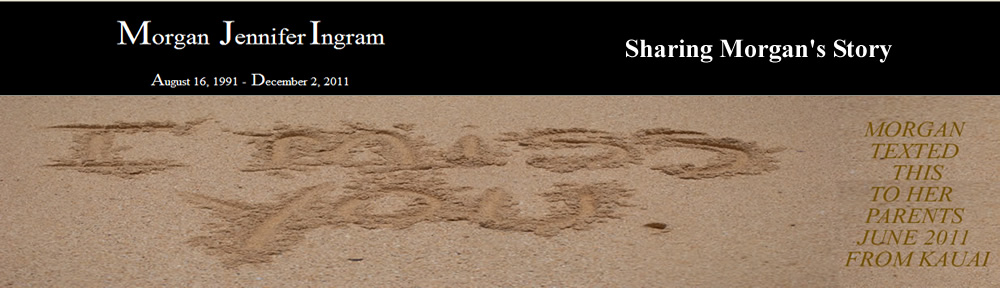

Dear Self,
Remember how frightened and lost you felt when your 19-year-old daughter, Morgan, became the victim of a stalker. You had no idea what to do or where to turn. Morgan was terrified. You were scared for her and angry that someone was stealing her peace. All you wanted was to protect her and keep her safe.
For four months, you did not have a full night’s sleep. The stalker kept waking you. You were afraid to leave the house unoccupied, fearing someone would break in while you were gone. Morgan was afraid to go outside without pepper spray, especially after dark. She feared someone might hide beneath her bed, so she removed the frame and lowered her bed to the floor, leaving no space underneath.
You learned what it means to live in constant fear: always looking over your shoulder, checking your surroundings, anticipating every vulnerability. Hypervigilance became part of everyday life.
You did everything you could think of to protect her. You established safety protocols, installed cameras and motion detectors, and called the sheriff’s office whenever something happened, day or night. You kept a detailed log of every incident. Eventually, it became a felony stalking case.
But after only four months, Morgan was found dead, and your world shattered.
There are no words that can fully explain the pain of losing a child. Alongside that grief came the relentless question: Was there something else I could have done?
Remember this: You loved her. You listened to her. You took her fear seriously and fought to protect her with the knowledge and resources you had. You deserved help. Morgan deserved safety. The responsibility for stalking belonged to the person who chose to terrorize her.
You would never be the same. You were now a mother carrying the loss of your daughter and a survivor of the fear that had consumed your family.
In that darkness, you felt pulled between disappearing beneath the covers and finding the strength to stand up. Slowly, you chose to move forward. You wanted justice for Morgan. You wanted to understand the justice system and stalking protocols. Above all, you wanted other young women to have the chance to survive.
Six months after Morgan’s death, you launched https://www.MorganIngram.com, which included the blog https://www.MorgansStalking.com and the Facebook Page https://www.facebook.com/morgansstalking. You began sharing a daily timeline of what Morgan had experienced, leading up to the day she died https://morgansstalking.com/?p=389.
You could not have known how far her story would reach.
People in more than 115 countries read it. They wrote with questions, thoughts, encouragement, and stories of their own. Some told you they finally recognized the behavior they were experiencing. Others said Morgan’s story helped them understand their fear, seek support, or feel less alone. If you go to https://morgansstalking.com/?p=389 you can start reading the timeline and view all the comments below each blog post.
Through those messages, you discovered that sharing Morgan’s story could help others find their voice.
You came to understand how essential education and awareness are. Recognizing stalking behaviors and knowing where to turn can help people make informed decisions about their safety. Your willingness to speak about something so painful gave others the courage to speak, too.
Remember that your grief does not require you to be strong every moment. You can rest. You can cry. You can step back when life asks more of you than you can give. None of that diminishes your love for Morgan or your commitment to helping others.
Keep learning. Keep speaking. Keep honoring her life.
I promise myself that I will continue fighting for justice and raising awareness of the dangers of stalking. I will carry Morgan’s memory into every story I share and every person I help.
My love for her has never ended.
Neither has my determination. Remember, always keep moving forward. Don’t ever let anyone slow you down.
Love,
Me


