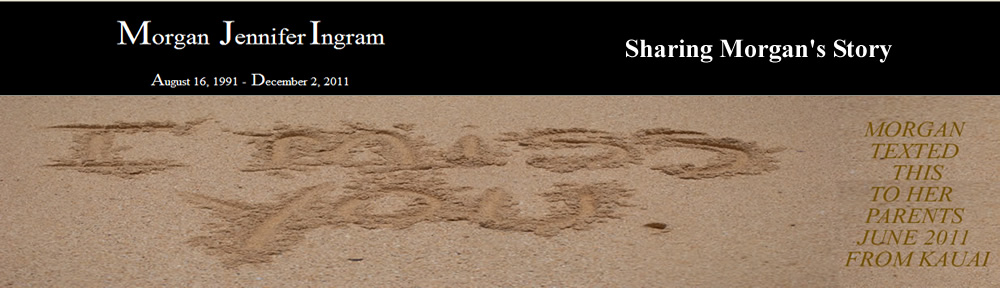
The Idaho Four Case: Exploring Parallels with Patterns Seen in Stalking Cases

Prosecutors said they had no evidence that Kohberger knew the victims. Stalking should not be presented as a fact in the Idaho Four case, but I would like you to think about the parallels with patterns that are seen in other stalking cases. 

  • Watching someone and learning their routines. Following, watching, or repeatedly appearing where someone lives, works, or socializes are recognized stalking behaviors. A comparison could examine surveillance—but should not claim Kohberger monitored the victims’ routines without verified evidence. Understanding the Serious Crime of Stalking
  • Monitoring someone online. Stalking can involve tracking activities through social media, electronic devices, or location applications. However, claims that Kohberger followed the victims on social media were disputed in court and should not be repeated as fact. justice.gov
  • Looking at the entire pattern. An unwanted message, an unexplained appearance, or someone waiting nearby can seem disconnected when considered separately. Stalking involves a course of conduct, making the relationship between incidents essential to understanding what happened. Understanding the Serious Crime of Stalking
  • The potential for lethal violence. Stalking can be dangerous and potentially lethal. That makes prevention an important discussion, but a homicide alone does not establish that stalking preceded it. Office of Justice Programs
  • Separating evidence from assumptions. The Idaho case illustrates why this matters: public claims about stalking circulated despite prosecutors saying evidence did not support those claims. I assume this was because some of the evidence showed that Kohberger drove by the residence multiple times before the murders, and Kaylee Goncalves, 21, one of the four victims, said she believed she spotted someone stalking her from the tree line outside the house at 1122 King Road. These reasons, along with the quote below from a Fox News article, lead me to understand why people would feel like stalking was involved in this case. (https://www.foxnews.com/us/idaho-murder-documents-reveal-victims-stalking-fears-kohbergers-inappropriate-behavior-school).  We need to take stalking seriously while keeping documented facts, unanswered questions, and theories clearly distinguished.

    “Mark my words, I work with predators. If we give him a Ph.D., that’s the guy that in that many years when he is a professor, we will hear is harassing, stalking, and sexually abusing…his students at wherever university…“

    — Quote attributed to an unnamed WSU professor of Bryan Kohberger’s

How is it possible that it has been almost 15 Years Since Morgan Was Murdered?

It’s true… it has been almost 15 years since that horrific morning—the morning I found my 20-year-old daughter’s body.

I went into shock. Real shock. I had no idea what had happened to her. As crime scene tape went up around our home, I kept asking myself—and everyone around me—how she could be dead.

Of course, my first thought was: Had her stalker gotten into our house? But that possibility was so horrifying that I could barely bring myself to consider it. To me, it meant we had failed to keep her safe. I know now that the responsibility belongs to whoever harmed her, never to the family trying desperately to protect her.

The detective said there were no signs of forced entry, and I believed him. I have since learned that the absence of forced entry does not mean someone could not have entered. But in those first devastating hours, I clung to the hope that it couldn’t have been her stalker.

Then came the other questions. Had someone slipped something into her water bottle when she briefly visited friends before coming home? Had the relentless fear, stress, and exhaustion driven her to take something that caused an overdose? I was searching for an explanation while struggling to comprehend the unimaginable.

But questions must be answered by evidence.

After reviewing the laboratory results, photographs, videos, and written records, I do not believe the evidence supports natural causes—the coroner’s original determination—or suicide, the determination on her amended death certificate. Nor do I believe it supports an accidental death.

Everything I have reviewed has led me to one conclusion: Morgan’s life was taken, and she fought damn hard to survive. Her death was not a failure of strength. She deserved to be safe. She deserved to live.

My conviction comes from the evidence I have spent years examining and the questions that remain unanswered. Others may dispute my conclusions, but I will continue demanding a full accounting of what happened to my daughter.

Nearly 15 years have passed. My love for Morgan has not faded, and neither has my determination to seek justice.

I will keep bringing the evidence forward. I will keep asking the hard questions. And I will never stop fighting for Morgan.


Advice for Families & Friends of Stalking Victims

Advice for Families & Friends

What should loved ones do—and what should they avoid?

  • BELIEVE THEM. Listen and take their concerns seriously. Do not dismiss, question, or minimize what they are experiencing.
  • REMIND THEM THAT IT IS NOT THEIR FAULT. The stalker is responsible for the behavior. No one deserves to be stalked, threatened, or made to feel unsafe.
  • BE SUPPORTIVE. Offer emotional support without judgment or pressure. Instead of telling them what to do, ask, “How can I help you feel safer?” Respect their choices and recognize that they know their situation best.
  • HELP THEM CONNECT WITH RESOURCES. Offer to help them find victim services or a stalking advocate. Support them in documenting incidents, preserving evidence, and exploring options for reporting to law enforcement.
  • RESPECT THEIR PRIVACY. Do not share their location, routines, photographs, or personal information without permission. Ask how you can communicate with them safely.
  • SUPPORT SAFETY PLANNING. Help them work with a trained advocate to develop a plan tailored to their circumstances. Depending on their needs, this may include reviewing home security, securing online accounts, establishing a code word, or arranging trusted check-ins. Discuss changes together rather than assuming any single measure will keep them safe.
  • DO NOT CONFRONT THE STALKER. Avoid contacting, threatening, or trying to reason with the person on their behalf. Well-intended intervention could increase the danger.
  • Your role is to listen, believe, and support—not to take control. Consistent, compassionate support can help someone feel less isolated as they navigate what to do next.

SPARC – STALKING PREVENTION, AWARENESS AND RESOURCE CENTER. https://www.stalkingawareness.org/wp-content/uploads/2020/07/SupportingLovedOnesExperiencingStalking.pdf

What To Do If You’re Being Stalked

REMEMBER, STALKING CAN BE LETHAL. IT’S DANGEROUS AND CRIMINAL IN ALL 50 STATES IN THE US

  • 📒 Document every incident – see link below for sample log
  • 📸 Save screenshots & messages
  • Tell the people you trust – more eyes and ears seeing and hearing about what is happening to you. Do not be embarrassed or ashamed (it is not your imagination, and you did nothing to bring this on); others need to know and help watch out for you, including neighbors and co-workers
  • Trust your instincts – your instincts are more accurate than your logical thoughts when it involves a stalker
  • Consider keeping pepper spray or some other protection on you at all times, and don’t hesitate to use it if confronted
  • The use of other safety measures should be implemented, like cameras, motion alarms, etc.
  • 👮 Report to police/law enforcement every single incident, with date, time, what happened, and how it made you feel. Your fear is real and needs to be noted for law enforcement to understand the impact and take your case seriously
  • 🧳 Keep a go-bag ready
  • 🐾 Make a safety plan for yourself and your pets

Click here for a link from SPARC for Documentation Logs & Victims’ Handbooks in many different languages: https://www.stalkingawareness.org/documentation-log/

The Case Book Files Podcast Coming Soon…

I am so excited about the new True Crime Podcast called The Case Book Files that is coming soon.

Here is the video of the Denver7 news show that aired on TV last week. Click on the link below and listen if you can.

Robert Wells, a friend and colleague of mine, talks about the case of his brother, Sid Wells, and the murder that has never received justice. Sid’s case will be the first one highlighted on this coming podcast.

Sid was a journalism student at the University of Colorado Boulder when he was shot and killed in his own home. At the time, he was engaged to Shauna Redford, Robert Redford’s daughter.

This was another case out of Colorado that was not handled correctly, and the suspect was released and disappeared into the night, never to be found. When listening to the following news show, you will start to understand why the Case Book Files podcast will be critical to solving these cold cases.

It is not just another podcast to raise awareness; it is a podcast to help solve cold cases. Please click on the link below to listen to this newscast.

https://m.youtube.com/watch?v=pQEXBwWPTpo